

By organizingyour case files matter-wise, your team can handle complex authorities better.
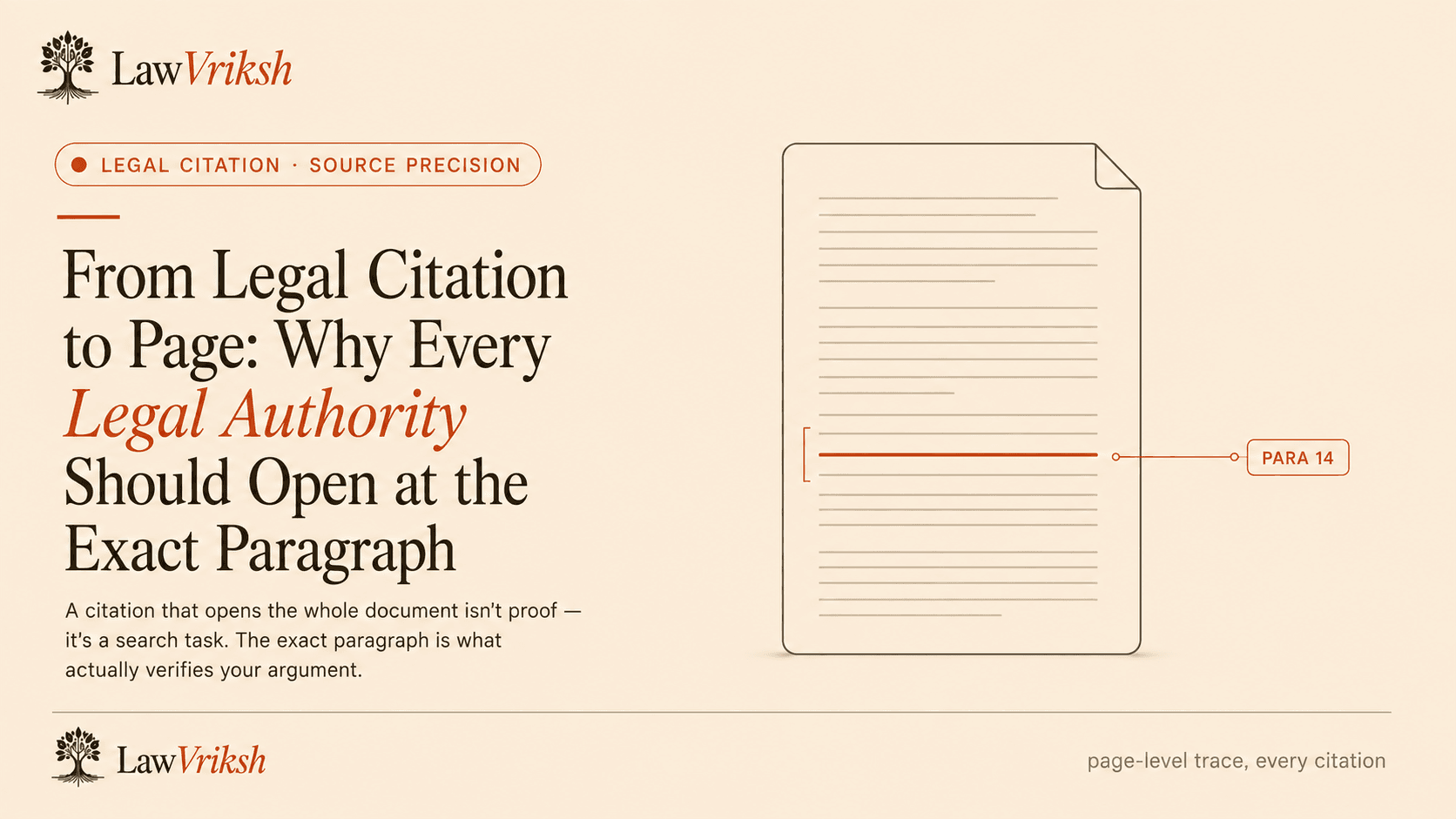
Every legal citation becomes a direct link to the truth. This makes your legal citation accurate, reliable, and ready for court.
Key Takeaways
Prioritize direct navigation to specific paragraphs to save preparation time.
Maintain an advocate-controlled workflow to keep your strategy focused.
Use page-level tracing to eliminate manual scrolling through lengthy documents.
Organize your case files in a matter-wise structure for better accessibility.
Ensure every reference serves as a verifiable link to your supporting evidence.
Why Legal Citations Need More Than a Case Name
When you just use a case name, it's hard for others to follow. Traditional ways often only
use the case title. This makes it hard to find the right part of the document.
This inefficiency slows down your work, which is a big problem when you're getting ready for a hearing. Time is very important then.
A good legal citation does more than just name a document. It follows Bluebook Rule 3.2, which says pincites are key. Pincites help find the exact part of a document you need.
Being precise is key in legal work. A clear, linked reference lets your team check your
points fast. This makes your arguments strong and trustworthy.
"The strength of a legal argument is not found in the volume of cases cited, but in the precision with which those authorities are applied to the facts at hand."
Let's look at how we've changed how we handle references in our work.
Feature | Traditional Citation | Modern Source-Linked Citation |
Primary Identifier | Case Name Only | Case Name + Pincite |
Verification Time | High (Manual Search) | Low (Instant Access) |
Accuracy | Prone to Misinterpretation | High (Context-Aware) |
Workflow Impact | Slows Down Research | Accelerates Drafting |
Using a detailed approach to legal citation saves a lot of time. Going beyond just the
case name makes sure every point is backed up. This is what makes a good brief
stand out.
The Problem with Citations That Lead to Entire Documents
When a citation points to an entire document, not just a paragraph, it hinders your chamber workflow. You must manually search through pages to find the relevant information. This slows you down and distracts you from your task.
Wasted Time During Legal Research
Spending time scrolling through large legal documents takes away from actual analysis. If you
can't quickly find the needed passage, your progress is halted. This turns a simple task into a long, tedious one.
We think your time is better spent on strategy, not searching. By making it easier to find citations, you can focus more on building a strong case. A system that links claims directly to their sources is key for a successful practice. Explore more about legal research here: Legal Research: "Checked and Nothing Found" vs "Not Checked"—The Difference That Decides Court Readiness
Difficulty Verifying the Supporting Passage
Verifying a claim is more than just opening a file; it's about seeing the exact context. Broad links often miss the fine details that make a legal argument strong. For example, Rule 5.1(a) requires specific formatting for block quotes over fifty words to keep things clear.
"Precision in citation is not merely a formal requirement; it is the bedrock of a credible legal argument."
Without page-level links, confirming if a cited authority supports your argument is hard. This uncertainty makes you double-check every reference, slowing down your work even more.
Risk of Misquoting or Misinterpreting Authority
The risk of using imprecise links is misquoting or misinterpreting the law. Without direct access to the exact paragraph, you might take a statement out of context. This mistake can weaken your argument in court.
To avoid these issues, we suggest a more detailed approach to legal research. Make sure every
citation goes straight to the exact location. Accuracy is your best ally when preparing for court.
What a Source-Linked Legal Citation Should Show
Improving your work in the courtroom starts with clear citations. These should lead directly to the source of your evidence. Good legal technology connects your arguments to the facts, not hiding them. This way, every point you make is backed up by solid evidence.
The Exact Document
First, your citation should clearly point to the exact document in your case. In complex legal documents, being clear is crucial. You can use short names for long titles, making your references easier to follow.
The Exact Page or Paragraph
References to whole cases or laws are not enough for a strong litigation strategy. Your citations should go to the exact page or paragraph with the evidence. This saves time and avoids the hassle of searching through many pages for a single point.
The Context Around the Citation
Without context, citations can be misleading. A good system lets you see the full story behind any claim. This ensures the evidence is used as intended. We think clear sourcing is key to a strong legal case.
Feature | Traditional Citation | Source-Linked Citation |
Document Access | Manual search required | Immediate digital link |
Precision | Case-level only | Page or paragraph level |
Verification | Time-consuming | Instant context review |
Legal Sources | Static and isolated | Dynamic and connected |
Why Exact-Source Verification Matters in Litigation
Success in court often depends on quick evidence verification. Exact-source verification is key for effective litigation management. It turns your work from slow to fast.
Faster Document Review
At the start of a case, you face a lot of papers. Quick document review means finding important facts fast. This saves time and catches all key points.
Stronger Legal Drafting
Your written arguments are stronger with clear sources. Direct links to evidence make your legal drafting clear and hard to dispute.
Better Preparation for Court Hearings
Good hearing preparation means you're ready for any question. If a judge asks about a claim, you can show the exact source right away. This shows you're in control and builds trust. To know more about hearing preparation, read Court Hearing Preparation: Why a Hearing Brief Should Be Generated Only from Verified Facts, Not Raw Documents.
Feature | Traditional Workflow | Verified Workflow |
Source Access | Manual search | Instant link |
Drafting Speed | Slow and cautious | Fast and confident |
Court Readiness | High risk of delay | Immediate verification |
Evidence Integrity | Prone to error | High accuracy |
How Legal AI Can Make Citations Verifiable
An intelligent AI legal assistant connects your legal arguments to the sources. It automates
document review, letting you focus on strategy. You still have full control over your work.
Connect Claims Directly to Sources
Modern legal AI links your claims to specific passages in case files. No more searching
through papers. You can instantly find where a statement comes from.
This direct connection keeps your arguments based on facts. It's crucial for building
strong cases.
Preserve Source Context
It's easy to lose the meaning of a source when taking a single sentence. Our technology
keeps the context of sources intact. It lets you review the full paragraphs around the extracted sentence.
This approach ensures your interpretation is accurate and defendable. It keeps your arguments grounded in reliable legal sources.
Flag Unsupported or Unverified Claims
The key role of an AI legal assistant is to protect your work. It flags claims without solid
evidence before you finalize them. This helps you spot missing evidence and
strengthen your case.
This legal AI supports your judgment, not replaces it. It guides you to verify your claims with solid evidence.
Read more
about Legal AI: Why the Advocate Remains the Final Decision-Maker in Hearing Preparation.
How LawVriksh Connects Citations to the Exact Source
LawVriksh changes how you handle your chamber
workflow by linking every claim to its source. We think legal tech should help
quietly, making sure your arguments are backed by solid evidence. This is key
during the drafting phase.
Digitize → Understand → Map Facts → Draft
Our platform makes your daily tasks easier with a simple, four-step method. First, you
digitize your records. Then, the system understands them through deep analysis.
After that, you map the facts and draft your submissions, knowing each point is
backed by evidence.
Searchable Matter Memory
We offer a matter memory that indexes all your case files for quick access. This way, you
don't have to search through piles of paper. It's like having a digital library
where all important documents are just a click away.
Cite-as-you-write for Page-Level Source Links
Our Cite-as-you-write feature makes document review more efficient. It lets you create page-level
trace links that stay with your draft. As an AI legal assistant, LawVriksh keeps these links active. So, you can easily check the source of any citation.
AI Markers and the Checks Panel
Accuracy is crucial during hearing preparation. That's why we have tools that check your work. Our AI markers point out any missing arguments, and the Checks Panel helps you fix unverified claims. This way, you can ensure your arguments are strong before court.
Frequently Asked Questions
Understanding modern citation tools is key to a better workflow. As you use new methods, you
might wonder how they affect your work. This includes how they change your efficiency and the quality of your submissions.
Why should legal citations link to the exact page?
Linking to the exact page helps avoid confusion for judges and opposing lawyers. It cuts down
the time spent looking through big case files during hearings.
This method also keeps your reputation strong. It makes sure every claim is backed by the actual text. It stops the mistake of using a broad document when only a specific part is needed.
What is source-linked legal drafting?
Source-linked drafting links every claim in your document to its source. This makes your
legal research a dynamic, verifiable asset, not just a static file.
Keeping these links ensures your citations stay correct as you work. Remember, even with these links, following standard formatting rules is still important. For example, Rule 1.1 says to use semicolons to separate citations in footnotes and "and" for the last two citations.
How does legal AI improve citation verification?
Modern legal AI is a constant helper that checks your claims against your documents. It
spots mistakes that might be missed by a human during a long day of work.
By automating this check, you can focus more on your legal strategy. This tech makes sure
your citations are strong evidence, not just placeholders.
How does LawVriksh connect claims to their sources?
LawVriksh uses advanced legal technology to create a detailed matter memory for your cases. It connects facts to their
source documents, so you can track every argument back to its source.
Digitization: Turns raw documents into searchable, structured data.
Mapping: Links specific facts to the exact page of the source.
Verification: Uses AI markers to keep your draft consistent with your evidence.
By using this matter memory, you have full control over your case files. This method ensures
your preparation is detailed and defendable in court.
Make Every Legal Citation Immediately Verifiable
Improving your advocacy starts with making every legal citation verifiable. This approach
gives you full control over your arguments. You can link every citation
directly to the exact page of a document.
This method helps you create a solid timeline of evidence for your case. Your team can stop
manually tracking facts. Instead, they can rely on a system that connects facts
to their sources.
Effective litigation management needs tools that focus on accuracy and speed. By
following these practices, your work will be solid during critical hearings.
We encourage you to begin making your practice more transparent today. Use source-linked
citations in every case to uphold the highest legal standards.