

The scale of modern data is huge. The Chambers USA 2026 guide
research looked at over 1.2 million data points. This was done in just seven
months through 75,000 interviews. It shows that systematic data management is
key to staying ahead.
We think your team's collective knowledge is your greatest asset. A
shared memory system turns scattered documents into one, easy-to-search
resource. This setup lets your chambers of law digitize and map case files
accurately. It keeps every advocate in charge while tapping into the firm's
vast experience.
Key Takeaways
• Institutional knowledge must be centralized to remain effective.
• Individual memory is insufficient for modern, data-intensive litigation.
• Systematic data management mirrors the scale of global legal research.
• Shared memory systems prioritize advocate control and traceability.
• Digitizing case files creates a foundation for better case preparation.
• Collective intelligence acts as a force multiplier for small legal teams.
What Is Shared Matter Memory?
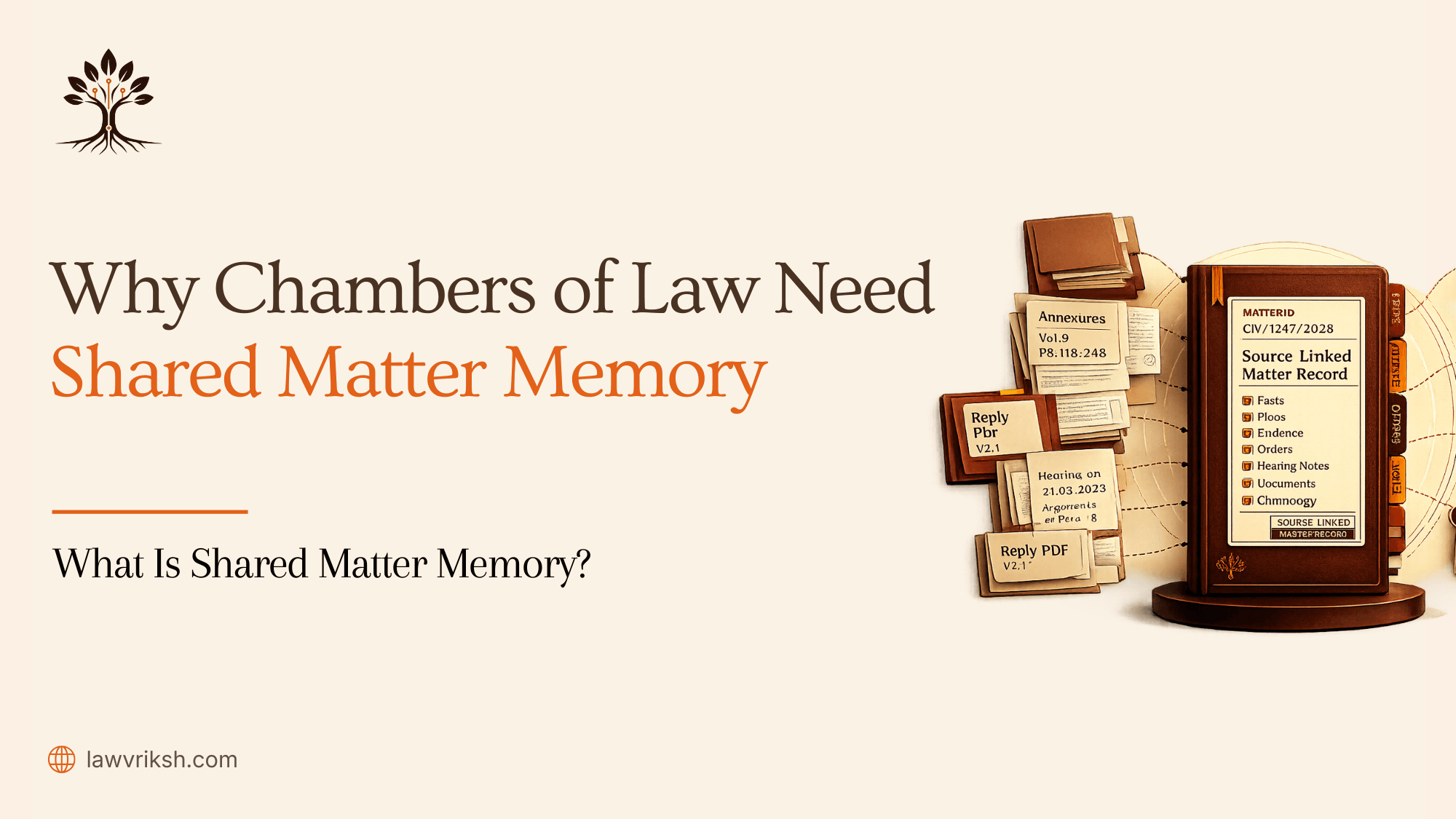
Shared matter memory is the digital core of a modern, efficient
legal practice. It acts as a comprehensive, searchable repository that captures
a legal matter's entire lifecycle. For busy chambers of law, it means moving
from isolated, fragmented notes to a unified truth.
This memory holds every verified fact, pleading, court order, and
evidence gathered in litigation. By digitizing these, your team gets access to
the same source-linked information. This is crucial for managing complex,
document-heavy cases.
Centralizing case data turns individual effort into a durable,
chamber-wide asset. This supports a consistent legal strategy, as everyone
works from the same verified base. In the end, chambers of law that adopt this
model lower oversight risks and enhance legal argument quality.
Why Personal Memory Is Not Enough for Chambers of Law
When case details are only in one person's mind, the whole chambers
of law is at risk. Relying on one person's memory is weak. It holds back the
team's progress.
Knowledge Silos Reduce Team Efficiency
Not sharing information leads to silos. This stops others from
helping fully. Advocates often redo work already done by a colleague. This
inefficiency wastes time that could be used for better things.
Working alone is common in many chambers of law. Without a shared
space, the team can't use everyone's skills together. This is a big problem.
Case Knowledge Should Not Stay with One Lawyer
Putting all case history on one person is risky. If that person is
out, the team can't keep clients or courts updated. Inconsistent case handling
happens when facts aren't shared.
Being a team is key to doing well. When everyone knows what's going
on, service quality stays high. Traceability of facts becomes the norm, not the
exception.
Reassignments Can Lead to Loss of Institutional Knowledge
Changes in staff are normal. When a lawyer moves on, the team loses
valuable knowledge. This is hard to get back and hurts ongoing cases.
By not relying on one person, chambers of law keep their knowledge
safe. A team approach means everyone knows the facts. This creates a stable and
continuous service for clients.
Why Shared Matter Memory Is a Chamber Asset
When your chamber treats case data as a shared asset, you turn
isolated files into a powerful tool for legal excellence. This approach lets
your team go beyond individual efforts. It uses the collective wisdom of the
whole practice.
By using a strong litigation management system, you make sure all
evidence and legal strategies are accessible. This is crucial for those who
need them most.
Preserve Institutional Knowledge Across Matters
Institutional memory is key to a top law practice. Take the Porter Hedges Construction Practice,
ranked by Chambers USA for 23 years. This success comes from meticulously
preserving and using historical case data for decades.
Sharing knowledge prevents losing important insights when team
members leave. This builds a durable foundation. It lets junior associates
learn from senior advocates' successes and mistakes. Your chamber becomes a
treasure trove of proven legal strategies.
Improve Collaboration Between Legal Teams
Collaboration fails when team members have scattered information. A
shared memory offers a single source of truth. This ensures all lawyers work
with verified facts.
This transparency cuts down on internal questions. It makes case
strategy sessions more productive. By centralizing data, you make handovers and
support between departments smooth. This leads to better drafting and research.
Consistency becomes your practice's hallmark. Every team member adds
to and benefits from the collective intelligence of the chamber.
Maintain Continuity Throughout the Litigation Lifecycle
Litigation is rarely straightforward, and keeping momentum is
crucial. A reliable litigation management system keeps all details as a matter
moves from start to finish. This continuity helps your team maintain high
standards, no matter the case's length.
Keeping matter memory intact means every document and event is
source-linked and ready. This makes drafting faster and hearing preparation
more accurate. You give your clients the stability and expertise they expect
from a top-tier legal practice.
How Legal Technology Enables Shared Matter Memory
Choosing the right legal technology is key to a reliable shared matter memory. It helps move away
from physical stacks and scattered digital folders. This creates a unified
space where information moves easily.
Your team can then focus on strategy, not searching for lost
documents.
Centralize Case Files and Matter Information
Modern legal technology sets up a system to digitize and organize
case files in one place. This centralizes your data, reducing the chance of
working with outdated information. It ensures all lawyers have access to a
matter's full history.
Build a Searchable Repository of Case Knowledge
A good repository does more than store files; it makes them easy to
find. Advanced indexing lets you search for specific details quickly. This
saves time, letting you focus on high-value hearing preparation.
Keep Verified Facts Accessible Across the Chamber
The heart of this technology is source-linked data that everyone can
rely on. Verified facts linked to their sources reduce errors in drafting and
arguments. This ensures your team works with absolute clarity and confidence.
The Role of a Litigation Management System
A litigation management system is like the brain of your legal team. It keeps your work
organized and makes sure everyone is on the same page. This system helps you
manage complex cases smoothly.
Organize Documents Around Each Matter
Every piece of evidence and letter should be linked to its case. A
good litigation management system helps you do this. It keeps all your
documents in order, making it easy to find what you need.
• Centralized access to all case-related documents.
• Logical grouping of evidence by date or event.
• Instant visibility into the status of every filing.
Reduce Duplicate Work and Manual Searches
Junior lawyers often waste hours looking for documents that are
already there. A litigation management system helps avoid this. It lets your
team build on existing work, saving time and effort.
With access to past drafts and research, your team's work gets
better. You can focus on strategy and talking to clients. This way, quality and
consistency become the norm.
Support Faster Research, Drafting, and Hearing
Preparation
The main goal of a litigation management system is to help you
during hearings. It makes organizing documents fast, so you can quickly put
together your case. You stay in control and ensure everyone has the same
information.
Getting ready for a hearing becomes more precise and focused.
Whether you're writing a detailed response or preparing for questioning, having
all your work at your fingertips is a big plus. This organization means you're
always ready to present your strongest case.
Explore more about How a Matter Memory Checklist Preserves Case Understanding.
How LawVriksh Builds Shared Matter Memory
LawVriksh has a special
way to help lawyers organize their case files. We use legal technology to turn
simple documents into a strong base for court cases.
Digitize Case Files into Searchable Text
We start by making scanned PDFs and paper records into text that can
be searched. This makes sure all info is easy to find. Accessibility is key to
creating a shared memory for your team.
Extract Verified Facts, Dates, and Events
After digitizing, we find and pull out important data. We focus on
verified facts, dates, and events that tell the story of a case. This method
keeps your timeline clear and accurate.
Create Searchable Matter Memory
We put this data into a central place that serves as your team's
memory. Every lawyer can see the same info, making sure everyone knows the case
details. This legal technology is a single source of truth for all matters.
Generate Drafts from Verified Case Context
Writing drafts is easier when you have solid evidence. LawVriksh
lets you create drafts that are smart and in control, built directly from the
verified facts already gathered in your matter memory.
Verify Outputs with Cite-as-you-write and the Checks
Panel
You can check every statement with our Cite-as-you-write
feature and Checks Panel,
ensuring your work is precise. Each claim in a draft stays linked back to its
source, so accuracy is confirmed before a document ever leaves the chamber.
Feature | Traditional | LawVriksh |
Document | Physical | Centralized, |
Fact | Manual | Automated, |
Drafting | Prone | Validated |
Knowledge | Limited | Accessible |
Using these tools, your strategy stays strong and based on solid
evidence. Advanced legal technology lets your team focus on winning cases, not
just paperwork.
Read more about Why AI Must Fit the Chamber, Not the Other Way Around.
Frequently Asked Questions
We've gathered answers to common questions about digital memory
tools. As you modernize your practice, knowing about industry standards is key.
For example, the Chambers USA 2026 guide will launch on 4 June, helping you stay ahead.
What is shared matter memory?
Shared matter memory is the collective intelligence of your firm — a
centralized, permanent repository for verified facts, documents, and case
events, linked back to their sources. Unlike keeping case details in one
person's memory, this system keeps all documents and research in one place, so
everyone can access the information regardless of who is working on the case or
when.
Why do chambers of law need shared matter memory?
Modern chambers of law must handle complex litigation well, and
legal research keeps getting more complex, as the Chambers USA 2026 guide
shows. Without shared memory, insights get lost in emails or folders, and
manual filing and personal recall can't keep up. Shared memory keeps knowledge
intact and helps in preparing for hearings by drawing on the full history of a
case, even when team members change or matters run for years.
How does a litigation management system improve
collaboration?
A litigation management system makes communication easier by
offering a single platform for document review, where many advocates can work
on the same case at once and see the detailed history of every fact or exhibit.
It cuts down on manual updates and duplicate work, and helps ensure a senior
advocate's strategy matches the junior team's work, with everyone ready for
hearings using the same data.
How does legal technology preserve institutional
knowledge?
Legal technology turns static documents into searchable data,
extracting key dates and events to create a permanent, traceable record of a
chamber's experience. This is key to keeping up with commercial trends and
ensuring consistent service to clients over many years, so valuable insights
are never lost when a case closes.
Build Shared Matter Memory for Every Matter
Building a shared matter memory is a big step towards updating your
chamber's workflow. It helps you move away from scattered notes. By using the
right legal technology, you keep your team's knowledge safe.
This change makes your team work more accurately and confidently. It
ensures all lawyers understand the case facts clearly. LawVriksh helps keep this consistency in
complex cases.
Start digitizing your case files today. A searchable database helps
your clients and protects your firm's important info. This focus on
traceability and control keeps your practice strong.
These digital habits prepare your chamber for the changing needs of
modern law. Begin building your database now. See how it improves your daily
work and case preparation. You have the power to change how your team handles
each case.
Learn more at https://lawvriksh.com.