

By keeping your files in one place, you avoid the chaos of scattered
folders. This method lets you use technology effectively while keeping the
advocate in charge. It's not just about being organized; it's about creating a
dependable system that supports your decisions at every stage of litigation.
Key Takeaways
• Centralizing case data eliminates the risk of working with outdated evidence.
• A unified hub ensures that every document is easily traceable for hearing preparation.
• Advocates maintain better control over complex files through structured digital workflows.
• Technology serves as a support tool to uphold high legal standards in your chamber.
• Establishing a single source of truth creates a reliable matter memory for your team.
What Is a Single Source of Truth?
Starting your case files on solid ground means understanding two key
ideas: the single source of truth and the system of record. These terms are
often mixed up, but they play different parts in your daily work.
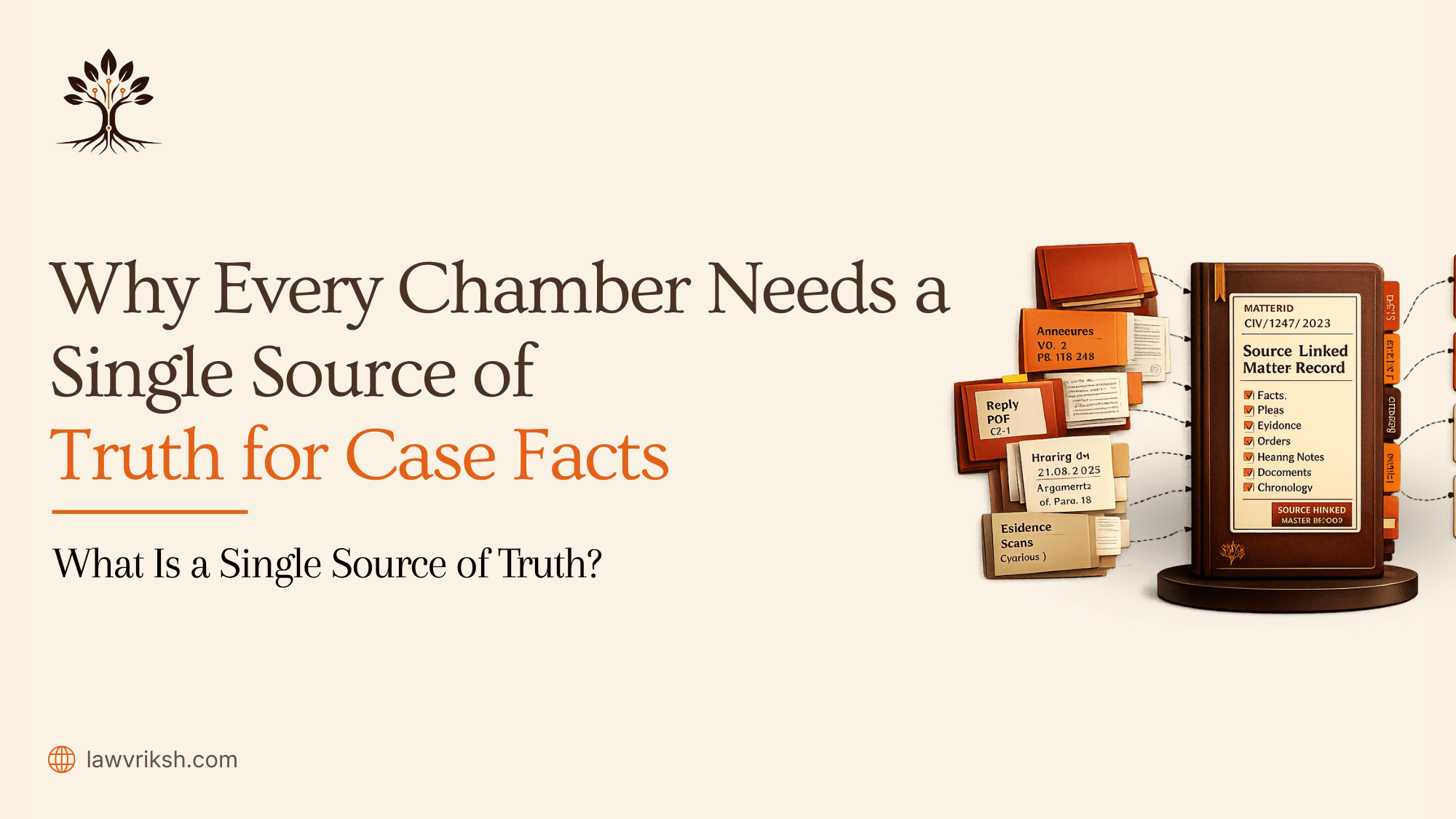
The single source of truth is the main source of information. It makes sure everyone
on your team uses the same, correct data. This stops the confusion from
different document versions. It gives you the clear information you need for
important decisions during hearings.
The system of record, on the other hand, is like a detailed journal
of your case files. It keeps track of every change, filing, and conversation.
It's like a digital diary that follows your work as the case moves forward.
It's crucial to know the difference between these two ideas for a
strong legal setup. The system of record follows your documents' history, while
the single source of truth gives you the facts you need to win your case.
Feature | System | Single |
Primary | Transactional | Authoritative |
Focus | Document | Verified |
Outcome | Audit | Strategic |
Usage | Tracking | Informed |
Why Data Consistency Matters in Litigation
In the high-stakes environment of an Indian courtroom, data consistency is key. It helps avoid procedural errors. When all documents
and facts match, you create a clear foundation.
This clarity ensures your legal team works from one truth. It's
crucial for their success.
Inconsistent information can cause trouble during critical moments.
If your team uses different versions of a document, the risk of presenting
wrong facts to the court grows. Such mistakes can harm your case, damaging your
credibility.
We suggest a system that keeps your case data in sync. This
eliminates confusion from different sources. By keeping data consistent, you
build trust and alignment in your team.
This lets you focus on the law's details, not sorting out
conflicting records.
The table below shows how consistent data workflow impacts your case
versus the risks of fragmented data management.
Feature | Consistent | Fragmented |
Hearing | Rapid | Slow |
Document | Verified | Conflicting |
Team | Seamless | Siloed |
Legal | Coherent | Risk |
The Cost of Fragmented Case Information
When your case facts are in different folders, your legal strategy
is shaky. This mess makes it hard for the legal department to work well. It
leads to mistakes that could be fixed with one system.
Scattered files make lawyers spend too much time finding documents.
They should be analyzing them instead.
Version Conflicts Across Legal Documents
Duplicate documents are a big problem in a broken workflow. You
might have "Draft_Final," "Draft_Final_v2," and
"Final_Revised_Actual" files. It's hard to know which one is the
latest.
Version conflicts are serious. Using the wrong document can cause
big mistakes in court. It's crucial to have one correct version.
Inconsistent Case Facts and Data Integrity Issues
Storing info in separate places makes keeping data integrity hard.
If a fact is updated in one place but not another, your case becomes shaky.
This weakens your arguments and can help the other side.
Your case records must match everywhere. Without a single place for
all info, you might show the court different things. Keeping all evidence in
sync is key to a strong case.
Missed Information During Drafting and Hearings
Scattered info can cause big mistakes during hearings. If you can't
find a fact quickly, you can't answer confidently. This makes you less
efficient and rely on memory instead of records.
Drafting is slow when you have to search for info in different
places. Keeping all your case details in one place helps you avoid missing
important facts. This lets you focus on the law, not finding documents.
Knowledge Loss When Information Is Scattered
Using memory instead of a system leads to lost knowledge over time.
When someone leaves or a case changes hands, the info can be lost. This makes
your legal department less efficient and harder to grow.
Institutional memory should be a lasting asset, not just personal
folders. By keeping your case history together, you protect your firm's
knowledge. This move to a structured system makes your practice stronger and
more efficient. Explore more about How
a Matter Memory Checklist Preserves Case Understanding.
Building a Single Source of Truth with Legal Technology
Creating a single source of truth changes how your chamber works. It
tackles the big challenge of managing lots of data. The right legal technology builds a strong base that supports your decisions, not
replaces them.
Choosing the Right System of Record
Picking a system of record is key for any litigation chamber. You need a system that handles
the complex needs of modern Indian legal practice. A good system keeps your
data safe, verifiable, and ready when you need it.
Here's a comparison between old ways of storing documents and a
modern system:
Feature | Traditional | Centralized |
Data | Manual | Instant |
Version | High | Automated |
Fact | Disconnected | Source-Linked |
Collaboration | Limited | Real-time |
Centralizing Case Files and Matter Information
Putting all your case files in one place makes them easy to find.
This stops the problem of using old or wrong information. It lets you focus on
the case's merits, not searching for files.
Connecting Facts Across the Litigation Lifecycle
Linking facts from start to finish makes a matter memory. This
single source of truth helps the advocate at every step. It keeps your
arguments strong and your evidence solid, whether you're writing pleadings or
preparing for cross-examination.
Best Practices for Maintaining Data Consistency
Keeping your data consistent in the legal department is key to
avoiding mistakes in court. When everyone uses the same verified info, the
chance of arguments in court goes down. We suggest a strict method that focuses
on order and responsibility at every step.
Standardized Document Organization
Disorganization in files can cause missed deadlines or lost
evidence. You should have a clear naming system for all legal documents. This
way, anyone can quickly find important files.
Version Control and Audit Trails
Legal work changes often, but different versions can confuse things.
It's smart to track every change to a document. Audit trails show who made
changes and when, keeping your case strategy solid.
• Use unique version numbers for every draft.
• Maintain a log of all substantive changes.
• Restrict edit access toauthorized personnel only.
Read more about
How to Audit an AI Legal Draft Before Filing.
Centralized Client Communications
Important facts can get lost in emails or notes. To keep a clear
record, put these communications in your case files. This way, every piece of
advice or client instruction is linked to the right case file.
Regularly Updating Case Records
A system is only as good as its data. You must regularly check and
update your records to keep data consistency. By verifying facts after each
court appearance, you keep your work smooth and your arguments strong.
Benefits of a Single Source of Truth for Law Firms
A unified repository for case information is key for modern legal
practice. It helps avoid the problems of scattered records and manual checks.
This change lets your team work with greater precision and confidence at every
step.
Improved Data Consistency and Data Integrity
Keeping data consistent across many files is a big challenge in
complex cases. Using one source of truth ensures everyone sees the same
document or fact. This boosts data integrity by avoiding conflicting
information in important hearings.
Better Case Collaboration
Teamwork improves when everyone works from the same, verified
information. Your associates can dive into legal work instead of searching for
documents. Transparency in the office keeps everyone on the same page, cutting
down on internal problems.
Streamlined Litigation Management
A strong litigation management system lets you manage your cases
clearly. You can track changes in different cases while keeping an eye on the
evidence. This method helps you focus on important legal work while keeping
costs low.
Faster Legal Research and Drafting
Having verified facts in one spot speeds up your research and
drafting. You don't have to search through emails or folders for information. A
centralized system lets you create accurate, source-linked drafts quickly,
giving you more time to improve your arguments.
How LawVriksh Creates a Single Source of Truth
We built LawVriksh
to give advocates full control over their case data. It uses legal technology
to make your work more precise and clear. Our platform is a solid base for your
legal strategy.
Digitize and Centralize Case Documents
The first step is to bring all your files together. We help by
turning physical files into digital ones. Then, we organize them in one safe
place. This stops the problem of using old or wrong information.
Build Searchable Matter Memory
After digitizing, our system makes a search-friendly database. This
lets you find important details fast, even when you're under pressure. No more
digging through papers to find what you need.
Link Facts to Source Documents
We let you connect each fact to its source document. This means you
can always track where your information comes from. Knowing this boosts your
confidence in court.
Generate Drafts from Verified Case Context
Our litigation management system lets you create drafts from solid
case facts. You can check your work with our Cite-as-you-write and
Checks Panel tools. This way,
your legal work is always right, defendable, and backed by evidence.
Read more about Why AI Must Fit the Chamber, Not the Other Way Around.
Frequently Asked Questions
Adopting a modern approach to case management changes how your
chamber handles complex cases. We offer answers to help you understand how a
digital foundation supports your daily work.
What is a single source of truth in legal practice?
A single source of truth is the main place for all case information.
It makes sure everyone works with the same, accurate data. This keeps facts
consistent in all documents and hearings.
Why do litigation chambers need a system of record?
Litigation chambers need a system of record to keep data accurate
and have a clear history of each case. Centralizing your files helps avoid
mistakes in drafting and court appearances. We suggest focusing on traceability
and control to stay competitive and reliable.
How does a single source of truth improve data
consistency?
It gives your team one verified version of every fact, so nothing
drifts out of sync across drafts, filings, or devices. If your system shows
different versions of the same information, mistakes can slip into hearings.
Keeping all data tied to one authoritative record keeps your strategy solid and
fact-based.
Can a litigation management system reduce drafting
errors?
Yes. When drafts are generated from verified, source-linked case
facts instead of memory or scattered files, there is far less room for factual
or citation errors to creep in. A centralized system also lets you check claims
against their source before filing, catching mistakes earlier in the drafting
process.
Build a Single Source of Truth for Every Matter
A chamber that works from one verified record of the facts spends
less time hunting for documents and more time on legal strategy. LawVriksh brings your case files, matter
memory, and drafting into a single, source-linked workspace, so every
submission is built on evidence you can trust.
Learn more at https://lawvriksh.com/